Fewer datacentres, more people?
Pathfinding vs. Wayfinding and the criticality of the ‘Bridger’ role
Fewer datacentres, more people! AI’s biggest barrier isn’t more power or speed, it’s more people and leadership.
This article offers a valuable perspective. In Continuous modernization demands more than just technology change, Linda A. Hill asserts that AI-driven modernisation is about people and leadership as much as technology. She describes a move from pathfinding, where you set a destination, plot the route and get everyone to follow it, to wayfinding. In wayfinding, leaders are open to opportunity, learn quickly and create the conditions for people across the organisation to find answers together.
This matches what I see every day. Experimentation has been embraced. Uncertainty has been accepted. People are using AI to solve their own and their team problems, and the number of initiatives launched by individuals, teams, departments and countries is remarkable.
But in my experience, wayfinding has a cost which needs to be understood and managed. When everyone is empowered to do their own thing, you get complexity and inconsistency. Most of these experiments solve one person’s problem, or a small group’s, and few people stop to ask what bigger opportunity their work could feed into and how it can scale to support a greater number of people and bring greater consistency which allows even greater scaling.
Making sense of it all takes real effort: finding out what exists, working out which experiments work the best, which scale, steering people towards the approaches that can be shown to be most effective and scaling local successes into something bigger. Joining complementary initiatives and teams. That effort needs people and leadership, and there is rarely enough human capital and ownership to handle the uncertainty and complexity that open experimentation creates. What holds my projects back is a lack of people's time and availability.
It also requires an architectural framework that promotes consistency, reuse and extensibility. Today, we continue to create more and more agents without systematically building on previous experience or connecting them to the broader processes they are intended to support.
Agents should be designed as shared and connected capabilities that can be scaled and reused across the organisation, rather than as standalone solutions. We also need a persistent memory layer to capture and retain insights, intelligence and expertise over time.
This becomes particularly important given the ongoing costs associated with MCP connections to external systems. These integrations often introduce additional licensing expenses for platforms we have already invested in and relied on for years. Without effective governance and reuse, costs will escalate quickly and become difficult to manage, or prevent us realising the full benefit as we cut functionality to reduce cost. A foundation is required for large scale automation in any complex business. It's a complex world, this takes time and effort.
This is where Hill’s idea of the Bridger matters. Bridgers connect functions, translate between perspectives and bring diverse experience together around a shared way of operating. That work is especially hard right now. AI is making people uncertain about their roles, so many dig in, stake claims to territory and resist collaborating, because everyone feels they need to prove their worth through initiative ownership - see what I've done.
The stakes are clear. If everyone works inconsistently, scaled automation becomes harder and more complex, and sometimes impossible. Scaling AI-driven modernisation depends on turning the best of our experimentation into consistent ways of working. That is the core work of service designers, human systems architects, systems thinkers and change managers, whether or not they call themselves bridgers - not only technologists.
And they can only do it with leaders who are willing to use their political capital to back it.
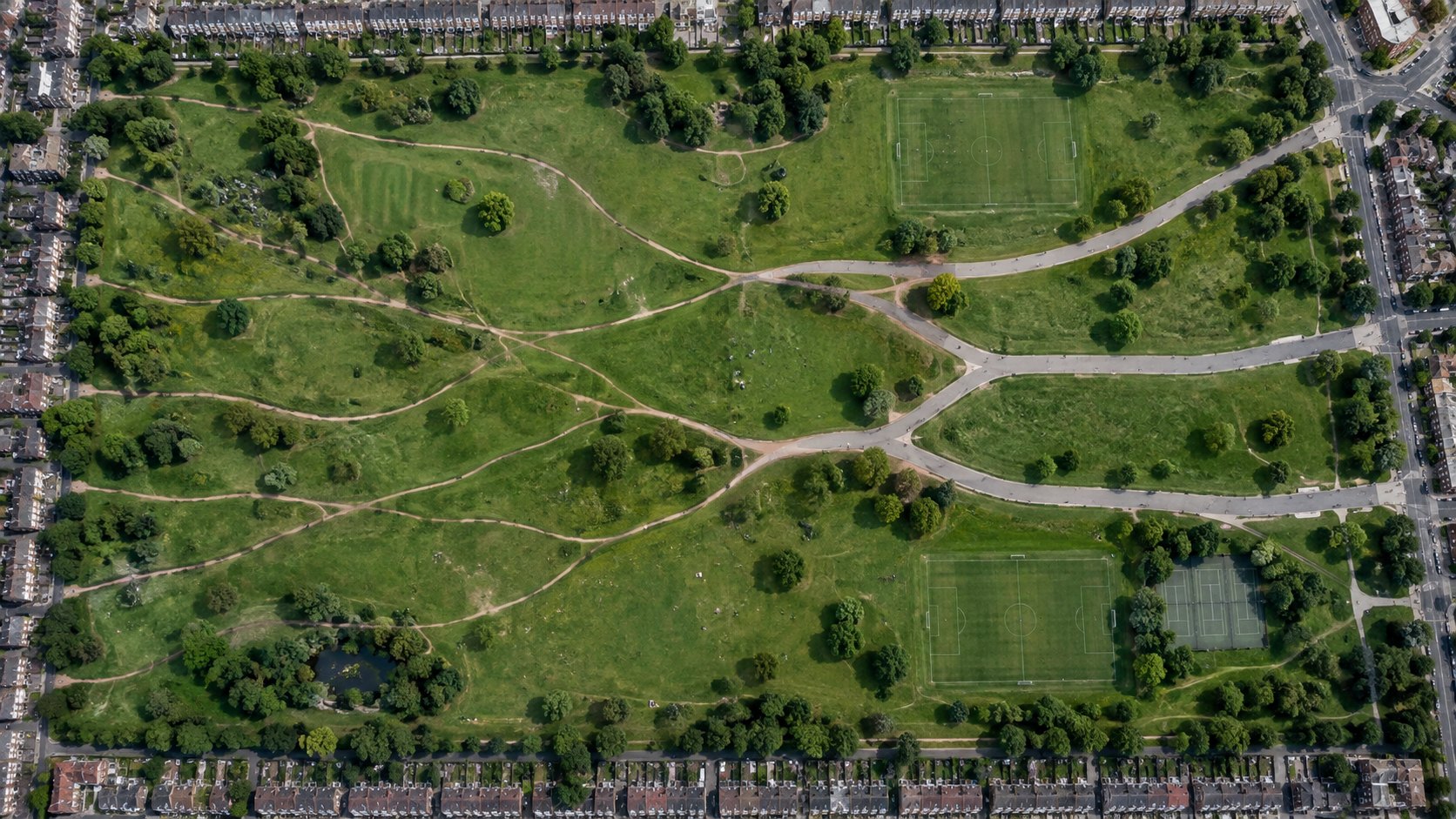
Ways need to become well-used paths.
It's an insightful read.
From the great library of insights on the Kyndryl Institute. #TheKyndrylInstitute