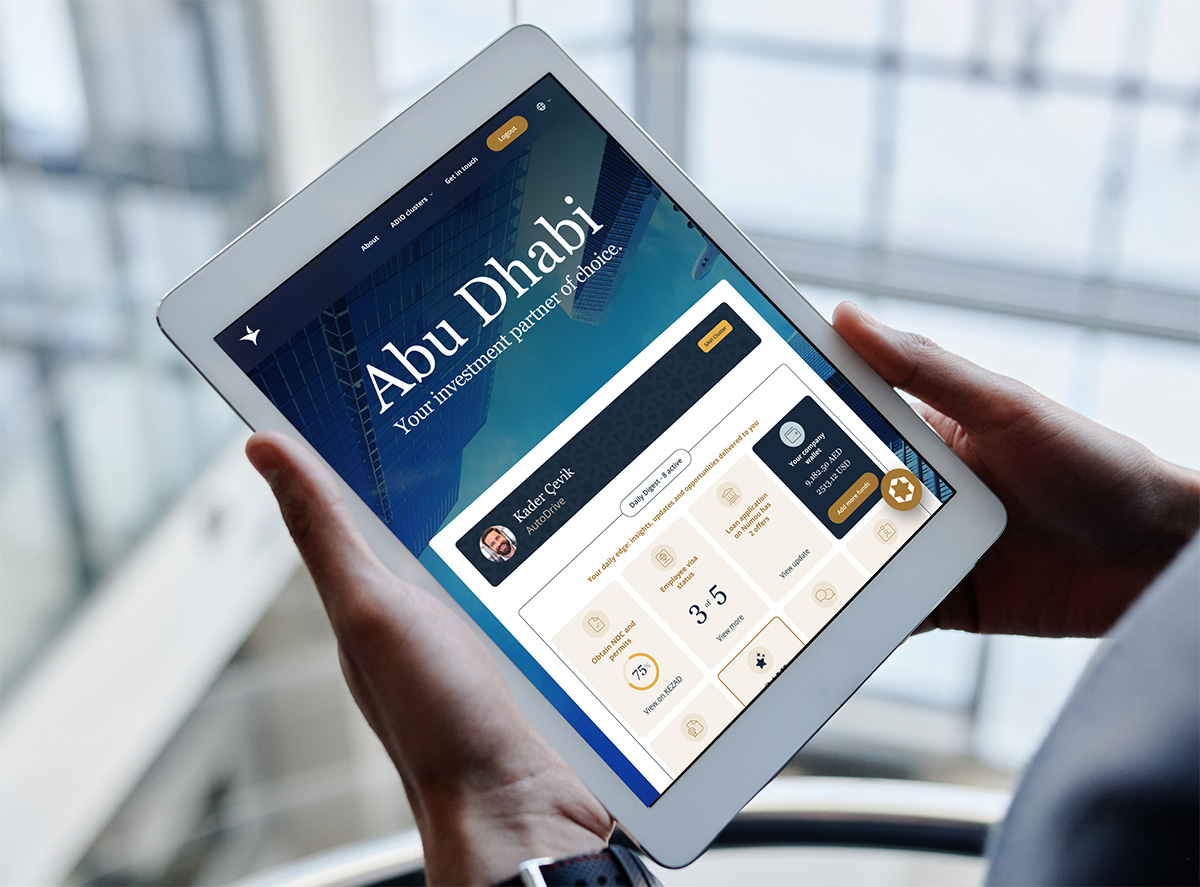

The future investor digital experience, designed in just 3.5 weeks
Led service envisioning and prototype creation for ADIO for their Abu Dhabi Business Week Investment Conference, showcased to 20,000 attendees and personally presented to the Crown Prince. Service design driving development of a realistic prototype featuring AI automation and assistance at its core, automating tasks and opening opportunities, while maintaining user control and contextual awareness.
With just a few weeks’ notice, the Abu Dhabi Investment Organisation (ADIO) needed a credible, high-fidelity concept for a future digital investor platform, to demo live at the Abu Dhabi Business Week Investor Conference, in front of tens of thousands of investors, businesses and media from around the world, with the Crown Prince as ultimate sponsor. An earlier attempt by another team had stalled after jumping straight into design. I took this on as Service and Experience Design lead for Avanade UK and we delivered a working, data-accurate, AI-augmented concept in just 3.5 weeks.
ADIO had publicly committed to demoing a concept for their future digital investor platform and with only weeks to go, no work had started. This was the promised investor digital future being made directly to the businesses and investors ADIO wanted to attract to Abu Dhabi and it had to feel real.
The platform needed to be
- Realistic and intelligent: AI-augmented, highly personalised, built around two personas: an individual high-net-worth investor and a committed, expanding business already based in Abu Dhabi
- A genuine fix for a real problem: investors and businesses across competing Middle East hubs all face the same maze of independent government departments, rules, processes and incentives and most hub relationships fade out after a year. ADIO wanted something different: a permanent relationship, powered by a digital and physical concierge, human contact always available, digital doing the heavy lifting
The stakes were about as high as they get. This would be demoed live to thousands of people walking the conference floor, shown to global media and the Crown Prince himself would get a personal walkthrough. There was no room for visible errors and no room for data that didn't hold up as a sophisticated, wealthy investor audience would scrutinise the numbers. A poor showing risked serious reputational damage, for ADIO and for everyone involved, in front of the most consequential possible audience.
Compounding it all: the first attempt had already failed, having gone design-first with too little groundwork. The client's confidence was shaken and the bar for a second attempt was higher than it would otherwise have been.
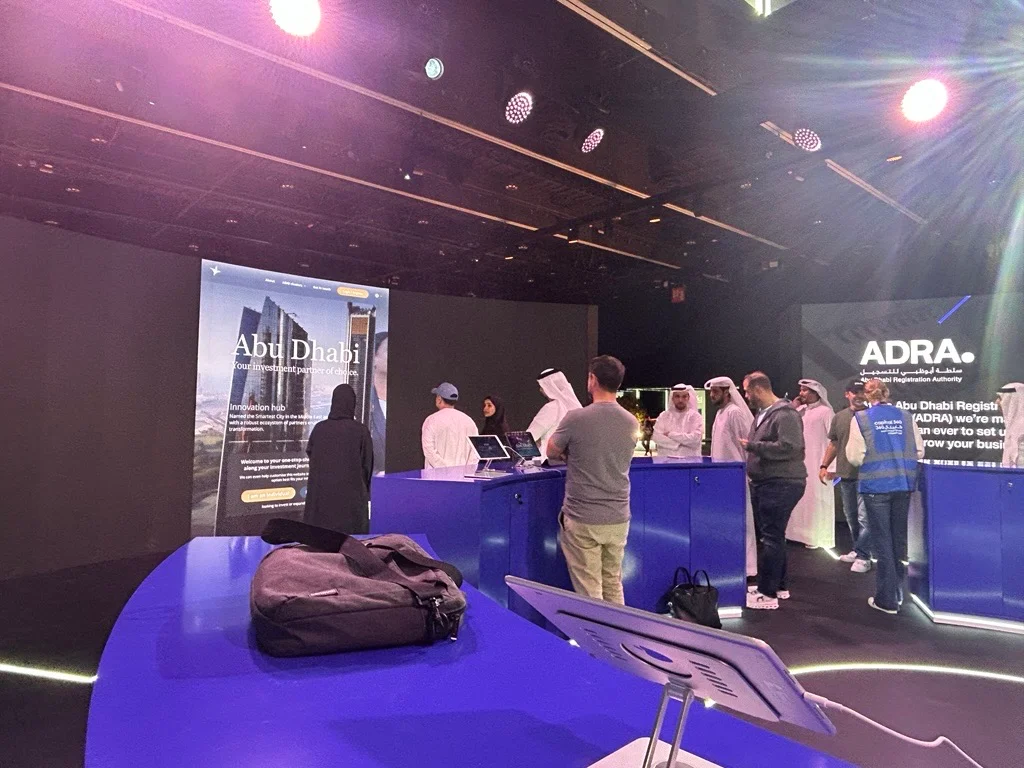
I led service and experience design for Avanade UK with a five-person team, reporting into an executive sponsor who managed the high-profile client relationship, important given how much hierarchy matters in this context. My responsibilities:
- Setting the working approach under severe time pressure, and deliberately resisting the instinct to jump straight into wireframes, given that's exactly what had failed the first time. We spent the first week in Mural, purely on users, story and journey, before any wireframing began
- Driving the call to prioritise narrative, data accuracy and journey logic over visual polish, a deliberate bet, given the audience would scrutinise every number on screen
- Coordinating stakeholder input, working with the single ADIO representative for assurance and information and synthesising input from multiple independent investor-support organisations and government departments into one coherent story
- Shaping the actual solution, translating fragmented services, data points and government touchpoints into a single, personalised “single pane of glass” concept, built for a live, high-visibility sell to ADIO and, ultimately, the Crown Prince
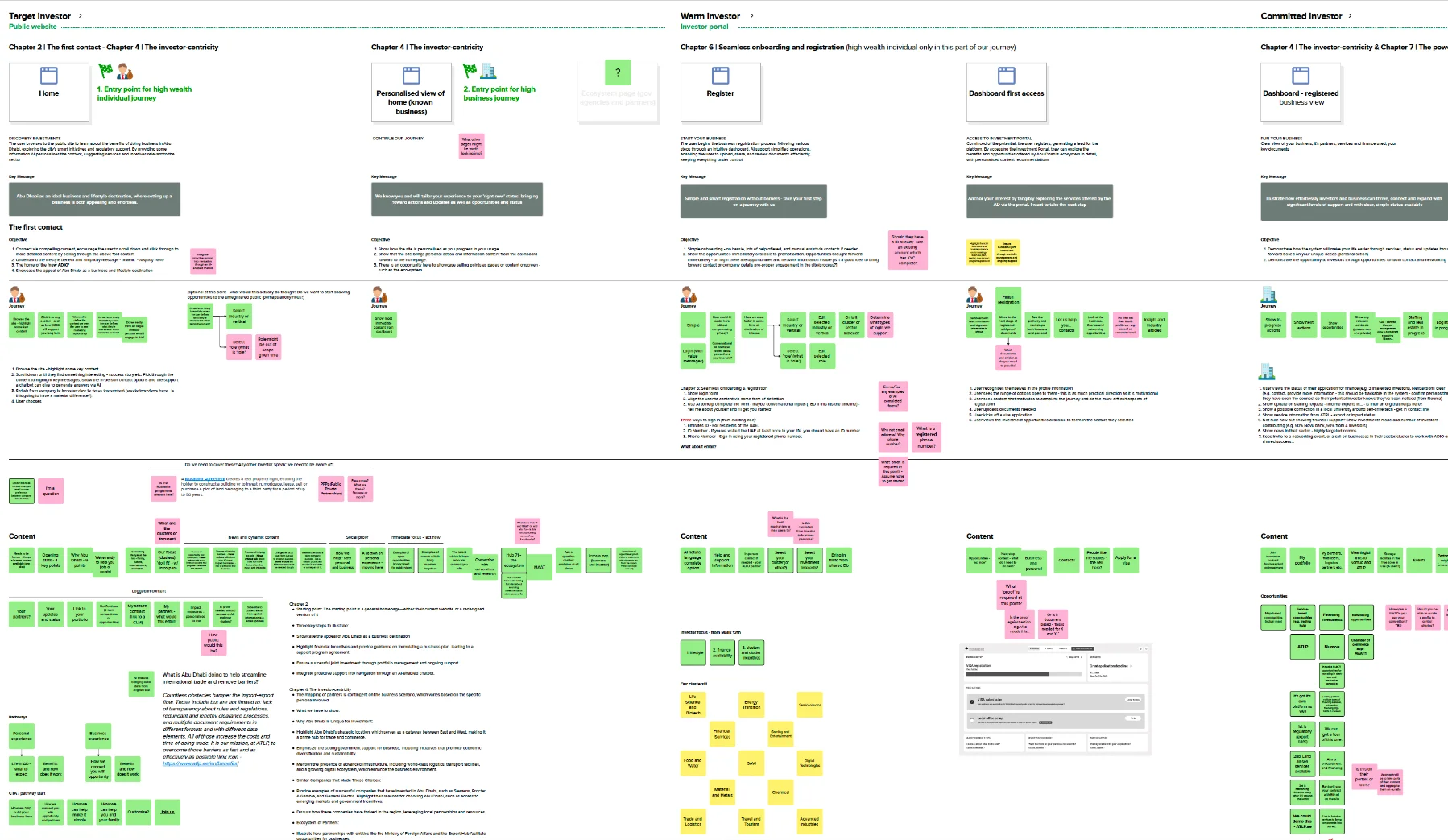
Discover
We ran a compressed round of stakeholder briefings, one per investor-support organisation, each an independent government agency with its own services, data and systems we needed to understand and incorporate. Each session covered their services and systems, followed by clarifying questions; the single ADIO representative helped source further information and provide assurance.
Given how limited our scope was for broader stakeholder engagement, we mapped exactly what information was needed at each step of the journey, sourced it and, critically, checked it was accurate and internally consistent (down to making sure figures actually added up) before wireframing started at all.
Design
Wireframing happened entirely in Mural, kept deliberately informal; we never had time to move into Figma. That rough wireframe work was the foundation for the polished visual design running in parallel, handled by the two visual designers, who brought an extraordinary level of attention to detail (down to catching an image with the wrong shirt stitching that could've read as the wrong emirate).
We treated data accuracy as a first-order design concern throughout: every figure and value on screen had to be consistent and defensible in front of an expert audience.
The concept itself: a single pane of glass sitting horizontally across the whole ecosystem, integrating multiple government and partner systems into one unified, intuitive experience connecting investors to opportunities, services and networks. We identified specific scenarios where an AI assistant could summarise complex information or complete tasks on the user's behalf, applying for and paying for licences or providing specific advice on German export law for example, reinforcing the personalised concierge feel. We illustrated a number of these use cases directly and surfaced live updates and required actions across connected systems: outstanding tasks, shipment and export status, opportunities like real estate incentives and ways to take advantage of the government's wider offerings.
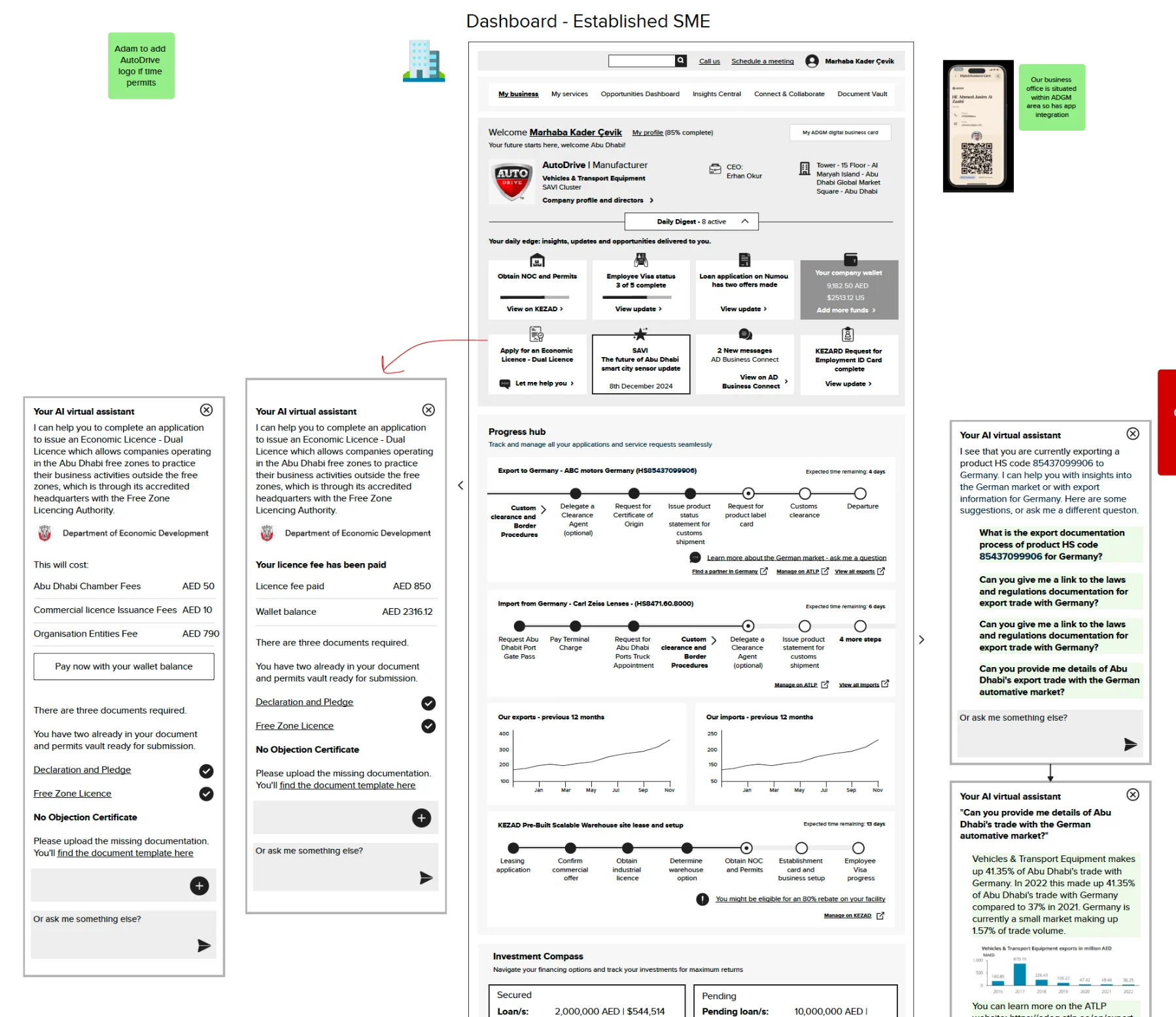
Deliver
Delivery went well beyond the design artefacts. We built training and enablement materials for the conference presenters: script-style narrative and context text, plus video walkthroughs as a fallback in case no one was available to demo live. We gave presenters extra context so they could personalise conversations with individual investors and businesses and walked them through specific use cases.
We built resilience directly into the live demo: video and self-running PowerPoint fallbacks meant the presentation couldn't fail, even if the technology did. We supported the live demo and the Crown Prince's private walkthrough directly, briefing the (suitably senior) presenter on the narrative beforehand. The demo was successful enough that it was run again the following week at a financial conference, in front of tens of thousands more attendees.
The demo impressed the Crown Prince enough that he greenlit the project on the spot, asking for delivery in just 100 days, an ambitious ask given the scope of what would actually be required. We estimated the resulting first-phase work at roughly several million dollars.
- The concept was showcased twice more at major Abu Dhabi events, reaching tens of thousands of additional investors, businesses and media
- We reframed a fragmented, department-by-department investor experience into a single personalised digital and physical concierge, directly addressing ADIO's competitive differentiation against other Middle East investment hubs
- We proved that a high-fidelity, data-accurate concept could be delivered in 3.5 weeks after an earlier attempt had stalled, validating that a narrative-first process can recover a high-visibility deliverable under severe time pressure
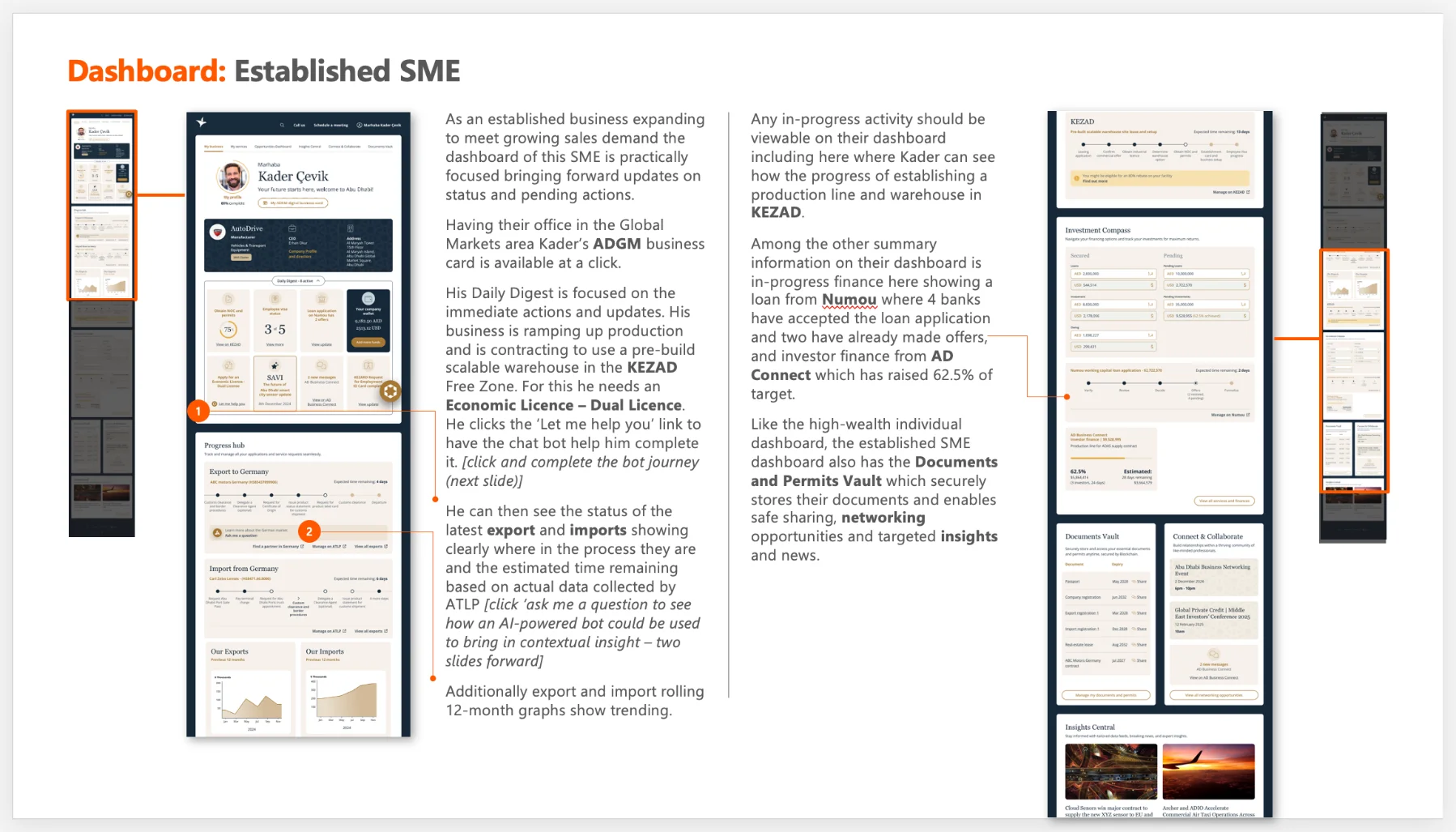
This project reinforced how much discipline it takes to resist designing too early, especially under pressure. With only 3.5 weeks and a single high-stakes live demo on the line, the instinct is to get straight into visuals, but the earlier attempt had already shown that path doesn't work. Investing time in Mural to nail the personas, the story and the data before touching a wireframe meant the eventual design work was fast, focused and defensible in front of an audience that would genuinely scrutinise every number.
The other big lesson was resilience. Building fallback video and PowerPoint versions turned a single point of failure into a demo that simply couldn't go wrong, which mattered as much as the design itself, given how nervous the client understandably was. So many reputations were on the line, in such a short window, for something as significant as the entire future investor-relations vision for Abu Dhabi. But we did it.
Ultimately, this came down to a small, tightly coordinated team of experts making disciplined sequencing decisions, narrative before wireframes, accuracy before polish, under a deadline that left no room for a second draft.